
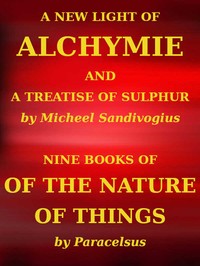
A New Light of Alchymie by Michal Sedziwój and Paracelsus
Let's be clear from the start: 'A New Light of Alchymie' is not a story in the traditional sense. You won't find characters or a three-act structure. Instead, imagine cracking open a time capsule from the Renaissance. Inside are the combined works of two legendary figures: Paracelsus, the bombastic doctor who challenged medical orthodoxy, and Michael Sendivogius, a Polish alchemist who claimed to possess the deepest secrets. This book presents their core ideas on alchemy, not as a money-making scheme, but as a profound spiritual and natural philosophy.
The Story
There's no narrative plot. The 'story' is the intellectual journey itself. Paracelsus argues fiercely against the old medical ideas of his time, insisting that true medicine comes from understanding nature's own hidden powers. He talks about extracting the 'quintessence' from things. Sendivogius follows, writing in a more poetic but equally secretive style about the 'Central Salt' and the 'Food of Life'—concepts pointing toward a fundamental, animating principle in all matter. The entire book is a series of propositions, experiments (described vaguely, of course), and philosophical assertions about how the universe works. The central tension isn't between characters, but between the text and you, the reader, as you try to decipher what on earth they're talking about.
Why You Should Read It
I loved this book because it completely shatters our modern categories. We see 'science' and 'magic' as opposites, but for these thinkers, they were the same thing. Reading Paracelsus rant about lazy doctors is weirdly entertaining—he had the energy of a fiery podcast host. More importantly, you feel the raw, ambitious hunger for knowledge. They weren't just trying to make gold; they were trying to find the key to health, longevity, and the very essence of creation. It's humbling and exhilarating. It makes you realize how much we take for granted and how messy the path to discovery really was.
Final Verdict
This is a niche read, but a powerful one. It's perfect for history buffs who want to go beyond dates and battles into the Renaissance mindset, for fans of fantasy and science fiction who want to see the real-world roots of their favorite tropes, and for anyone with a curiosity about the strange, beautiful ideas that paved the way for modern science. Don't expect easy answers. Come expecting a puzzle, a history lesson, and a glimpse into a world where everything was alive with hidden potential.
Edward Rodriguez
7 months agoHaving read this twice, the content flows smoothly from one chapter to the next. Don't hesitate to start reading.
Brian Miller
1 month agoJust what I was looking for.
Susan Martinez
7 months agoRecommended.


Jackson Jones
1 year agoCompatible with my e-reader, thanks.