
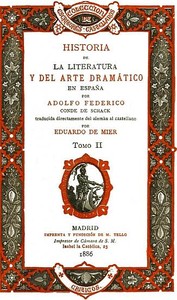
Historia de la literatura y del arte dramático en España, tomo II by Schack
Okay, let's set the scene. It's the mid-1800s, and a German count with a serious passion for Spanish culture, Adolf Friedrich von Schack, is digging through archives in Madrid. He's not just reading the famous stuff everyone knows. He's on a mission to find the plays that fell through the cracks—the ones that were performed, maybe even loved, but never made it into the official canon.
The Story
This book, the second volume of his massive project, focuses on Spain's Golden Age of drama. Think of it as a guided tour through a crowded, noisy marketplace of 17th-century Spanish theater. Schack doesn't just give you a list of titles and dates. He introduces you to the playwrights. He summarizes their wild plots full of honor, love, and sword fights. He shows you how theater worked as a business and a popular pastime. But the real "plot" of this book is Schack's own journey of discovery. He pieces together fragments, argues with other scholars of his day, and champions writers who had been completely forgotten. The story is his effort to rebuild a lost world, play by play.
Why You Should Read It
What's amazing is how fresh it feels. Schack writes with the excitement of someone who just found a box of treasure in the attic. You can feel his genuine awe for the creativity of this period. He gets frustrated when a manuscript is missing, and he cheers when he uncovers a true masterpiece that no one talks about anymore. Reading it, you stop seeing Spanish Golden Age drama as just "Lope, Calderón, and the others." You see a vibrant, messy, and incredibly rich scene with dozens of voices. It makes you realize how much of our cultural history is shaped by what gets saved and what gets left behind.
Final Verdict
This is a perfect read for anyone who loves deep-dive history, theater geeks, or people who enjoy literary detective work. It's not a light introduction—having some basic knowledge of the period helps. But if you've ever read Don Quixote or seen a play by Calderón and wanted to know about the world that produced them, this book opens the door. You're getting a 19th-century perspective on a 17th-century art form, which is a fascinating double layer of history. It’s for the curious reader who doesn't mind a bit of dust on the pages of history to find the real gold.
Sarah Thompson
1 year agoGood quality content.
Steven Thompson
1 year agoA must-have for anyone studying this subject.
Thomas Walker
6 months agoGreat read!
Steven Davis
2 months agoLoved it.



Ethan Gonzalez
1 year agoHelped me clear up some confusion on the topic.