
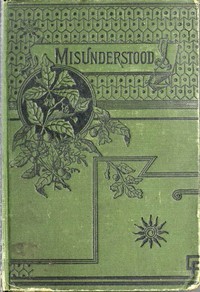
Misunderstood by Florence Montgomery
First published in 1869, Misunderstood tells the story of Humphrey Duncombe, a young boy growing up in a wealthy English household. After his mother's death, he's left in the care of his father, Sir Everard, a kind but distant man who doesn't know how to connect with his sensitive son. Humphrey's older brother, Guy, is everything a Victorian father could want: handsome, athletic, and obedient. Humphrey, by contrast, is awkward, accident-prone, and expresses himself in ways that seem deliberately troublesome.
The Story
The plot follows Humphrey through a series of small domestic disasters. He ruins a prized painting trying to 'fix' it, causes chaos during a formal visit, and generally fails to live up to the quiet, well-mannered ideal of a child of his class. Each incident pushes his father further away, convinced Humphrey is willfully naughty. The tragedy is that every one of Humphrey's actions springs from a place of deep love or a desperate attempt to gain affection. He isn't bad; he's heartbroken and misunderstood. The story builds toward a moment of heartbreaking clarity, where the truth of Humphrey's character is finally revealed, but it may come too late.
Why You Should Read It
This book hit me right in the feels. It's not a complex thriller, but a quiet, emotional character study. Montgomery makes you see the world through Humphrey's eyes. You feel his confusion when his gifts of love (like a clumsily picked bouquet) are rejected as mischief. You ache for him as he tries, and fails, to be like his perfect brother. The real strength of the book is how it questions our snap judgments. How often do we label someone—especially a child—as difficult without trying to understand the 'why' behind their actions? It's a powerful reminder about empathy, and it's just as relevant today as it was 150 years ago.
Final Verdict
Perfect for readers who love classic, character-driven stories with a strong emotional core. If you enjoyed the poignant family dynamics in books like Little Women or the sensitive child's perspective in The Secret Garden, you'll connect with this. It's also a great, short classic for someone new to Victorian literature, as it's less about dense social commentary and more about universal family emotions. Just be prepared for a story that's sweet, sad, and incredibly moving all at once.
Melissa Wright
6 months agoI was skeptical at first, but the narrative structure is incredibly compelling. Worth every second.
Christopher Moore
7 months agoAs someone who reads a lot, it manages to explain difficult concepts in plain English. I would gladly recommend this title.
Jessica Taylor
1 year agoGood quality content.
Ava Johnson
1 year agoTo be perfectly clear, it manages to explain difficult concepts in plain English. Absolutely essential reading.





David Martin
5 months agoHaving read this twice, the emotional weight of the story is balanced perfectly. A valuable addition to my collection.