
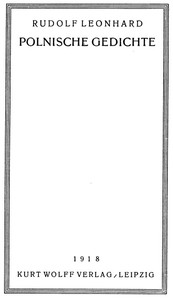
Polnische Gedichte by Rudolf Leonhard
I'll be honest, poetry can sometimes feel intimidating, but 'Polnische Gedichte' (Polish Poems) by Rudolf Leonhard is different. It pulls you in because it's so deeply connected to a real, painful moment in history.
The Story
There isn't a traditional plot with characters. Instead, the 'story' is the journey of Leonhard's own heart and mind. He was a German intellectual and pacifist who was deeply connected to Polish culture. This book collects poems he wrote about Poland, many during the horrors of World War I and the brutal aftermath that reshaped Europe. The poems move through landscapes—both the physical countryside and the emotional terrain of a people under siege. You feel the shock of invasion, the grief for lost cities and traditions, and a fierce, protective love for a culture he saw as a sibling to his own. It's a chronicle of witnessing catastrophe from a unique, cross-border perspective.
Why You Should Read It
This book matters because it's about solidarity in the most genuine sense. Leonhard wasn't Polish, but he championed Poland's right to exist and mourned its suffering as his own. In today's world, that feels incredibly relevant. His poems aren't just political statements; they're filled with vivid, aching imagery. You can almost see the frost on a winter field or hear the silence of a deserted village. He finds fragments of beauty and resilience, which makes the darkness around them even more powerful. It changed how I think about the role of an artist during a crisis—not as a distant commentator, but as someone who bears witness and refuses to let hope be entirely extinguished.
Final Verdict
This is a perfect pick for readers who love history that feels immediate and personal. If you enjoyed the emotional weight of a novel like 'All the Light We Cannot See' but want to experience history through the raw, concise lens of poetry, Leonhard's work is for you. It's also great for anyone interested in the complex cultural ties between Germany and Eastern Europe. Fair warning: it's a somber read, but it's not without light. It's the kind of book that doesn't shout; it whispers, and you have to lean in close. That's what makes it so unforgettable.
Andrew Martin
1 year agoHigh quality edition, very readable.
William Lopez
9 months agoSurprisingly enough, it challenges the reader's perspective in an intellectual way. Don't hesitate to start reading.

Kevin Ramirez
1 month agoFrom the very first page, the atmosphere created is totally immersive. Highly recommended.