
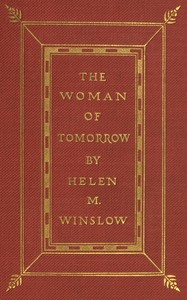
The woman of to-morrow by Helen M. Winslow
I picked up 'The Woman of To-morrow' expecting a period piece, but I found something much more lively. Helen M. Winslow wasn't just writing; she was arguing, hoping, and building a case for the women of her time and the ones to come.
The Story
This isn't a story in the traditional sense. Instead, Winslow uses a series of essays to paint a picture of early 20th-century life and then project forward. She looks at the 'New Woman' entering colleges and offices, the changing dynamics of marriage from an economic partnership to (she hopes) a true companionship, and the evolving concept of the home. She makes specific predictions: that women will soon hold high political office, that household chores will be revolutionized by technology, and that education will be the great equalizer. Reading it is a constant exercise in comparison—checking her 1913 vision against our 21st-century reality.
Why You Should Read It
What grabbed me wasn't just her ideas, but her voice. Winslow is witty, sometimes surprisingly progressive, and at other times, a product of her era in ways that made me pause. That mix is what makes the book so valuable. It doesn't feel like dry history. It feels like a conversation. You find yourself nodding along when she champions women's financial independence, and maybe raising an eyebrow at some of her other social views. It's a brilliant reminder that the path to progress is never a straight line and that people in the past were just as complex and forward-thinking as we are. It gave me a new appreciation for the debates that shaped our world.
Final Verdict
This book is perfect for anyone who loves history, especially social history, or has an interest in women's studies. It's also a great pick for readers who enjoy primary sources—getting history straight from the source, unfiltered. If you liked the vibe of 'What Would Virginia Woolf Do?' but want to go further back to the roots of these conversations, Winslow's book is a must-read. Fair warning: it's a book to engage with, not just accept. You'll disagree sometimes, but you'll always be thinking. For a glimpse into the hopes and dreams of women on the brink of massive change, it's absolutely captivating.






Mason Lopez
1 year agoWow.