
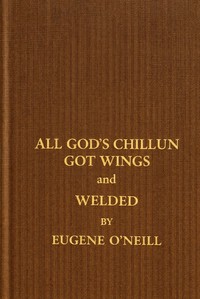
All God's chillun got wings, and Welded by Eugene O'Neill
Eugene O'Neill doesn't do simple. In this pairing of short plays, he takes us deep into the wreckage of two very different, yet similarly doomed, relationships.
The Story
All God's Chillun Got Wings is about Jim Harris and Ella Downey. They grew up as friends in a rough New York neighborhood, but as adults, their childhood affection turns into a risky, taboo love. Jim, a Black man striving to become a lawyer, marries Ella, a white woman from a broken background. Their union is a direct challenge to the racist world of the 1920s. The pressure isn't just from screaming crowds or hateful letters; it seeps into their home, warping Ella's mind and turning Jim's dream into a nightmare. Their love becomes a battleground.
Welded shifts the conflict inward. Michael Cape, a self-important playwright, and his wife Eleanor, an actress, are bound together by a fierce, almost violent passion. They're each other's whole world, but that world is suffocating. Every conversation is a power struggle, every separation feels like betrayal, and every reunion is charged with accusation and need. They orbit each other in a dance of mutual destruction, wondering if they should stay welded together or break apart for good.
Why You Should Read It
O'Neill writes about human pain with a surgeon's precision. What got me wasn't just the big social themes—though the portrait of systemic racism in 'Chillun' is chilling—it was the small, private agonies. The way Ella's prejudice, learned from the world around her, poisons her own heart. The way Michael and Eleanor in 'Welded' use love as a weapon. These characters aren't always likable, but you understand their desperation. You feel the walls closing in on them, whether those walls are built by society or by their own hands. It's a masterclass in writing tension and tragedy.
Final Verdict
This is for readers who aren't afraid of dark, complex emotions. If you're interested in the roots of American drama, or in stories that tackle race, marriage, and obsession without easy answers, O'Neill is essential. It's perfect for book clubs (you'll have tons to argue about) and for anyone who believes classic plays can still pack a serious punch. Just don't expect a happy ending—expect to be moved, and maybe a little shaken.



Sarah Lopez
1 year agoThanks for the recommendation.